
After two decades in Fortune 100 leadership at companies like Coca-Cola USA and Abbott Laboratories, and now nearly eight years of coaching executives, I’ve witnessed a pattern. The leaders who have the greatest impact—both in their organizations and in their own lives—aren’t necessarily the ones with the most credentials or the longest résumés. They’re the ones who have learned to trust their internal compass.
I’m thinking of two senior male leaders I’m currently coaching. Both accomplished, respected, and promoted multiple times. Both are sitting with the same uncomfortable question: Has my ambition led me to a place that’s aligned with my higher values?
The first leader built his career at a company that was once nimble and client-focused. After multiple mergers, it’s become a behemoth—complete with all the politics and bureaucracy that comes with scale. He’s drowning in spreadsheets and metrics, spending his days on the very things he’s least passionate about, while the client relationships where he actually excels have become someone else’s responsibility.
The second has an impressive title at an even more impressive company. He loves how people react when he shares what he does—the validation is real. But he hates the actual work. Managing a team of 50+ means he barely knows the people who report to him. He thrived in smaller spaces where collaboration felt natural, where he knew his team’s kids’ names, where they could solve problems together in real time. Now he’s managing spreadsheets and mediating conflicts between people he doesn’t really know. And here’s the kicker: he’s so busy worrying about what others will think if he steps back from this “impressive” role that he’s second-guessing every decision. He’s lost trust in himself.
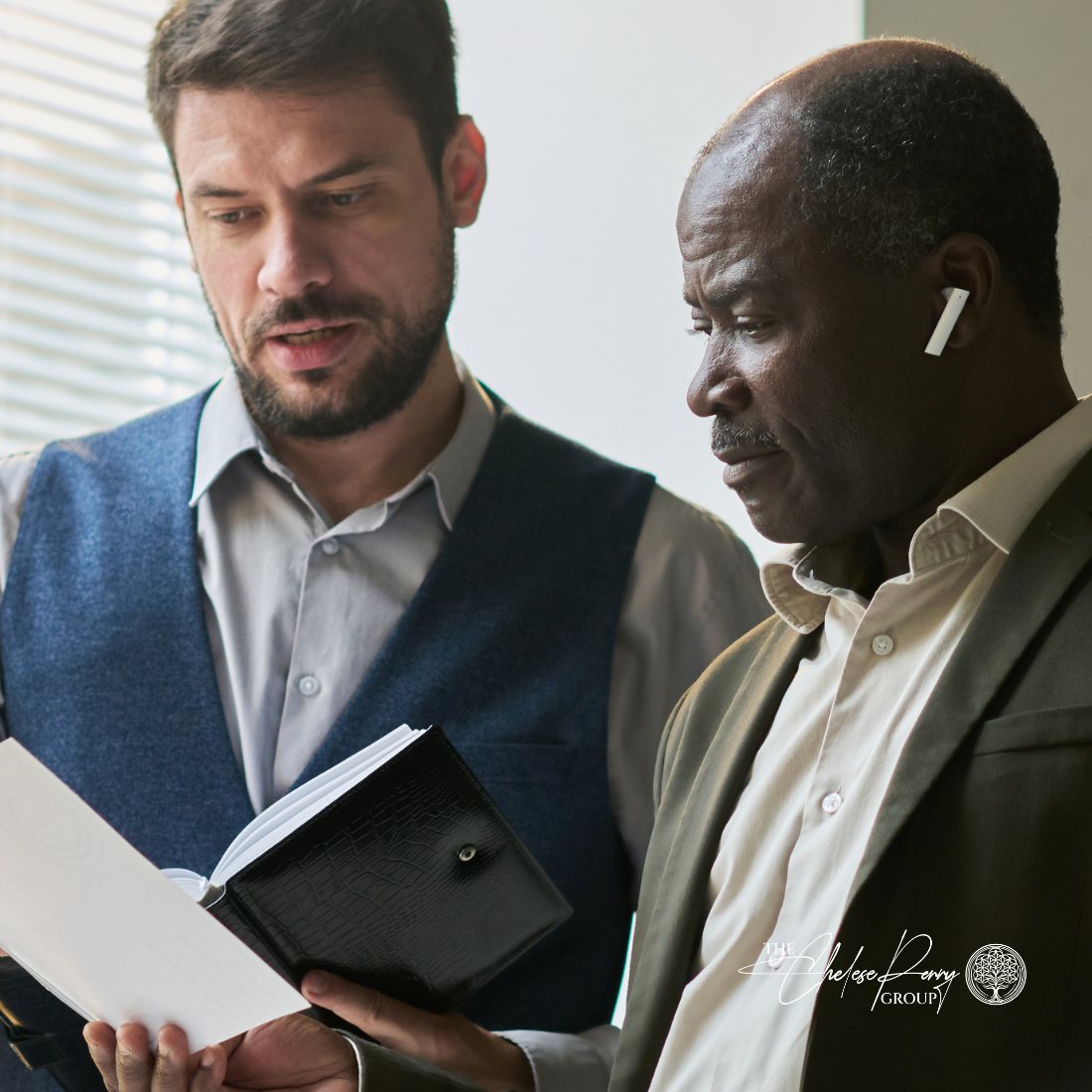
Different paths. Same realization: the achievement they chased doesn’t align with how they actually want to spend their days.
But here’s what makes self-trust so complex: it operates on two distinct planes that often feel at odds with each other.
The Two Dimensions of Self-Trust
Self-trust isn’t just about believing in yourself. It’s about navigating the intersection of two essential questions:
How do I want people to experience me as a leader? (External focus)
How do I want to experience myself? (Internal focus)
Most leadership development focuses exclusively on the first question. We learn to set intentions around our executive presence, our communication style, our impact on teams. This is the work of self-leadership—cultivating awareness about how we show up at work, at home, and in community.

But something critical gets lost when we only operate from this external orientation: we can become extraordinarily skilled at meeting others’ expectations while simultaneously losing connection with our own
inner wisdom.
This is where the second question becomes essential: How do I want to experience myself?
Not how others see me. Not what metrics validate me. But how it feels to be me moving through my days, making decisions, leading my life.
Two Frameworks, One Foundation
This distinction shapes the heart of both my Harmonious Leadership Circles and The Reclamation program—and self-trust is the thread that connects them. Both programs serve women leaders asking these essential questions, though they approach them from different angles. The senior male leaders I mentioned? I work with them through my 1:1 Executive Coaching Programs, where we navigate these same foundational questions in a personalized context.
Harmonious Leadership Circles: Trusting Yourself to Show Up
In our leadership circles for women, we focus on self-leadership and intentionality: What values and principles guide how you lead? How do you want to be known? What does it mean to be a grounded, authentic presence in your organization and community?
This work requires self-trust because you’re making choices about:
- The boundaries you’ll hold with difficult colleagues
- The vision you’ll communicate even when it’s unpopular
- The vulnerability you’ll model to create psychological safety
- The standards you’ll maintain when pressured to compromise
You can’t lead authentically from a place of self-doubt. When you don’t trust yourself, you second-guess every decision, over-explain every choice, and exhaustively seek validation before taking action.
The women leaders I work with in these circles learn to trust that their values aren’t just nice ideas—they’re the True North that makes their leadership credible and sustainable. They discover that alignment between their internal compass and external actions creates the foundation for influence that lasts.
The Reclamation: Trusting Yourself to Be Yourself
But there’s deeper work happening in The Reclamation—work that asks a fundamentally different question.
Instead of “How do I show up for others?”, we’re exploring “How do I experience my own life?”
This is where self-trust becomes radically personal:
- Do I trust that my desires matter, even if they surprise or disappoint others?
- Can I trust my intuition when it contradicts conventional wisdom about success?
- Do I believe my needs are valid, not selfish?
- Can I trust myself to want something different from what I wanted a decade ago?
The Reclamation specifically serves women leaders at midlife because the context matters profoundly. Women at this life stage face unique intersections: societal expectations about aging, caretaking responsibilities that often intensify, menopause, empty nests, and decades of conditioning around self-sacrifice that require a different container for transformation.
This program is about reclaiming your relationship with yourself. It’s less about how you’re perceived as a leader and more about whether you trust your inner wisdom enough to follow it—even when it leads you somewhere unexpected.
The Reclamation emerged from conversations with accomplished women who achieved everything they were “supposed to” and still felt hollow inside. They’d mastered external expectations but lost touch with their own truth. They could articulate how they wanted others to experience them, but they’d forgotten how to simply be themselves.

The Self-Gaslighting Trap
Here’s what I’ve noticed across my practice: high-achieving leaders—particularly women—are exceptionally good at self-gaslighting.
We tell ourselves:
- “Maybe I’m being too sensitive.”
- “I should be grateful for what I have.”
- “Who am I to want more?”
- “It’s too late to change direction now.”
- “I’m probably just going through a phase.”
And the men I work with have their own version:
- “I’ve come too far to question this now.”
- “This is what success looks like—I need to push through.”
- “My family depends on this trajectory.”
- “Wanting something different would be weak.”
- “Other people would kill for what I have.”
These aren’t random thoughts. They’re the static interference that drowns out our internal compass. For women, it’s often years of conditioning that taught us to prioritize others’ comfort over our own truth, to view our ambition as unseemly, to question our desires before we even fully acknowledge them. For men, it’s frequently the weight of provider expectations, the narrow definition of masculine success, and the pressure to never show doubt or uncertainty.
The journey from self-gaslighting to self-trust isn’t a linear path. It’s a daily practice of:
- Noticing when you dismiss your intuition
- Catching yourself talking yourself out of what you really want
- Acknowledging the gap between where you are and where your inner wisdom is calling you
- Taking action even when you can’t guarantee the outcome
The Practice of Self-Trust
Both of my frameworks—Harmonious Leadership and The Reclamation—are anchored in practices that rebuild self-trust:
In Leadership Circles, we practice:
- Values clarification that helps you recognize what’s non-negotiable
- Intention-setting around how you want to show up as a leader
- Accountability structures that reinforce your commitments
- Peer reflection that mirrors back your wisdom
In The Reclamation, we go deeper:
- Energy audits that reveal where your vitality is leaking
- Inner landscape exploration that reconnects you with long-buried desires
- Permission practices that challenge the “shoulds” you’ve internalized
- Integration weeks that honor the reality that transformation is a journey, not a sprint
Both approaches recognize that self-trust isn’t built through positive thinking or affirmations. It’s built through consistent micro-choices to honor what you know to be true—even when it’s uncomfortable, even when others disagree, even when the path forward is unclear.
When Self-Trust Transforms Leadership
 Something remarkable happens when leaders develop genuine self-trust in both external and internal dimensions.
They stop performing and start presencing. They move from proving their worth to owning their authority. They lead from alignment rather than exhaustion.
Their teams feel it. Their families notice. They themselves recognize something fundamental has shifted.
For the male leaders I mentioned earlier, the work looks different for each.
The first hasn’t figured out his next move yet. But he’s become crystal clear that where he is—and how he’s experiencing his current role—is negatively impacting his well-being and his family. That clarity itself is progress. The transformation isn’t always knowing what’s next. Sometimes it’s trusting yourself enough to acknowledge what’s no longer working.
The second has gained a different kind of clarity. What he initially saw as failure—the realization that he hates what he’s doing despite the impressive title—has become information. Sometimes you have to figure out what you don’t want in order to understand what you do want. He’s now aligning with his next opportunity, but first he has to get out of his own way by not letting others’ opinions about his decision interfere with what he truly wants.
The irony isn’t lost on either of us: the thing that’s made him most unhappy in his role is that he’s been second-guessing his every move and has lost trust in himself. The very problem we’re addressing is the lack of self-trust.
For the women in The Reclamation cohorts, it often means finally pursuing the business idea they’ve deferred, setting boundaries they’ve avoided, or making relationship decisions they’ve delayed. It means trusting that their needs aren’t selfish and their desires aren’t frivolous.
Because when you trust yourself to show up authentically (external), and you trust yourself to honor your inner wisdom (internal), you create a life and leadership that doesn’t require constant justification or validation.
You become the anchor—for yourself and for others.
The Invitation
Whether you’re a woman leader exploring your self-leadership through Harmonious Leadership Circles, ready to reclaim your relationship with yourself through The Reclamation, or a senior leader seeking personalized transformation through 1:1 Executive Coaching, the question remains the same:
Do you trust yourself?
Not in the vague, motivational-poster sense. But in the daily, practical, sometimes-terrifying sense of:
- Making a decision and standing by it
- Saying no without a lengthy explanation
- Wanting something and not apologizing for it
- Following your intuition even when you can’t rationalize it
- Honoring your needs without waiting for permission
This is the work. This is what makes leadership sustainable and life worth living.
And it all begins with trusting that your internal compass—your True North—is worth following, even when the world suggests a different direction.
Chelese Perry is a Professional Certified Coach (PCC) and founder of The Chelese Perry Group. Her True North® and Harmonious Leadership® frameworks help leaders align their values, purpose, and deepest wisdom with their authentic path forward. She works with women leaders through Harmonious Leadership Circles and The Reclamation and coaches senior executives through personalized 1:1 Executive Coaching Programs.