
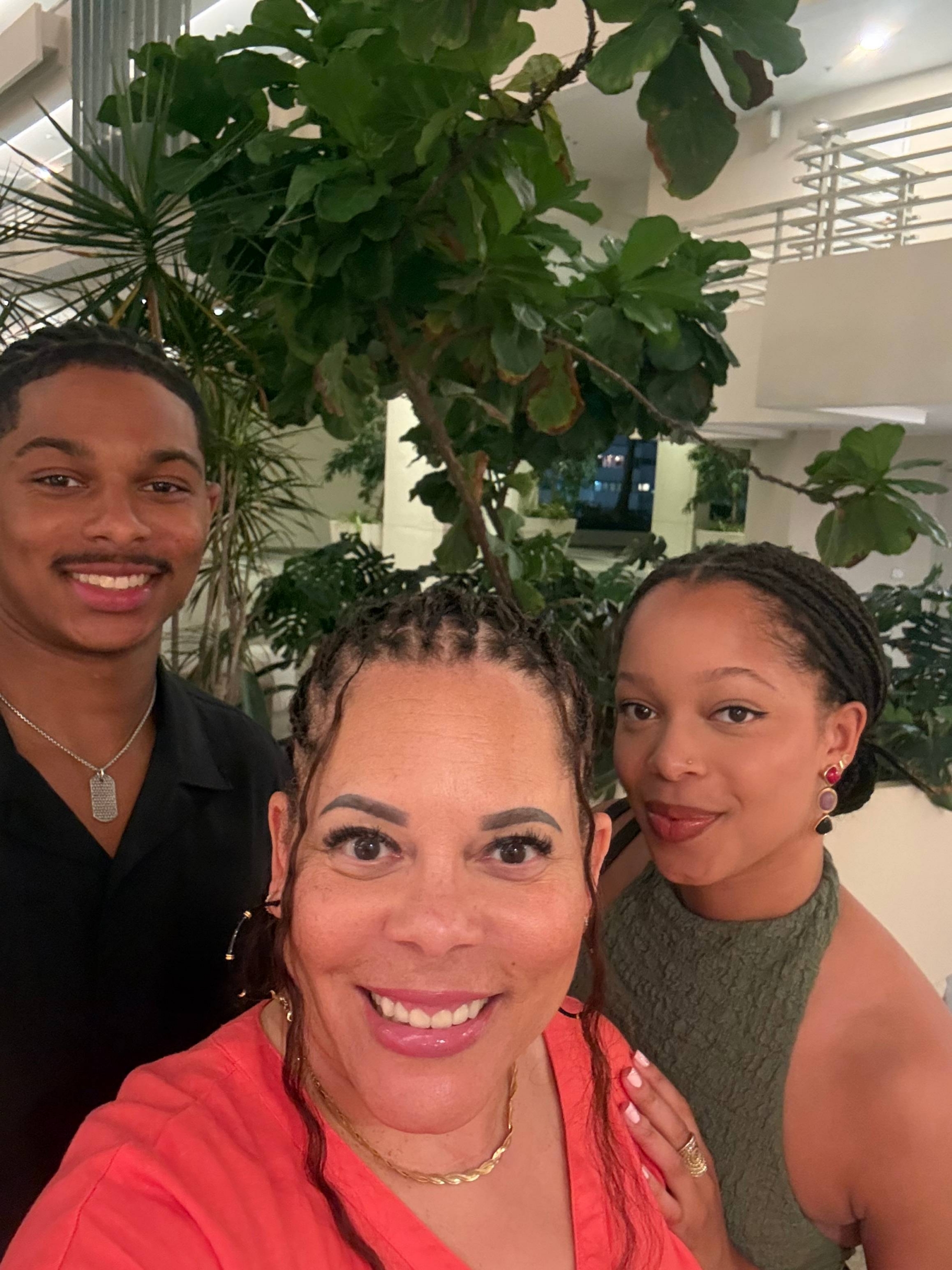
Fifteen years ago, I lost my way. This is what building a life, not an image, has taught me about finding my way back.
The moment
I was sitting in the audience watching my daughter receive her white coat at her medical school’s White Coat Ceremony.
It was the kind of moment you picture for years before it happens, and then it happens so quickly you can barely hold onto it. Her name was called. The coat was placed on her shoulders. And underneath all the pride, a quiet recognition surfaced:
This is what it looks like on the other side.
Months earlier, I’d watched my youngest cross a different stage, undergraduate degree in hand. Two milestones, months apart. Both of my children stepping into the next version of their lives.
I was proud, of course. But underneath that pride was something else: a recognition of what it had taken to get here.
Not just for them.
For me, too.
What I lost sight of
Fifteen years ago, I didn’t know I had lost my way.
That’s the trouble with drifting. You don’t always recognize it while you’re in it.
I was living for the image of what was expected of me rather than for what I valued. I was striving – chasing approval I didn’t even realize I was chasing and measuring my life by whether it looked successful instead of whether it actually felt like mine.
I didn’t have language for it then.
I do now.
Striving is always future tense. The next achievement. The next expectation. The next gap to close. Never quite arriving.
I had built a life for other people’s eyes. Eventually, I ran out of room to keep pretending it was the life I wanted.
The five years
It took me five years to make the decision to leave my marriage.
Five years is a long time to take a step. But this wasn’t a step I could take lightly. I knew the decision would affect many lives, not just mine, and I needed to be as sure as humanly possible.
My marriage had become deeply misaligned. I was performing a version of a life that no longer reflected what I believed.
But motherhood? I had always been locked in. That was never the performance. That was where my True North became impossible to ignore.
Somewhere during those five years, I asked myself two questions:
Would I want my son to see this model of marriage and believe this is what healthy and thriving looks like?
Would I want my daughter to grow up believing her role was to sacrifice herself at all costs?
I couldn’t answer yes to either. And once I knew that, there was no more room to stay.
At fifty, I was divorced.
At fifty-one, I founded my firm. I won’t pretend those years were simple or that I always knew what I was doing. They weren’t, and I didn’t.
But I knew I could no longer live for the image.
I had to start living what was true.
The ten years of building
The decade that followed wasn’t defined by one courageous decision. It was defined by hundreds of smaller ones.
Choosing alignment over appearance. Choosing presence over performance. Choosing boundaries over approval. Choosing what mattered over what looked right from the outside.
My children moved through middle school, high school, and college, and I was there for all of it, present in a way I’m not sure I could have been otherwise.
I built The Chelese Perry Group on many of the same principles I was learning to live by.
We downsized our home and chose more life instead. We traveled together. We learned to set boundaries none of us had known how to set before.
And slowly, we built the kind of resilience that comes from choosing the harder right over the easier comfortable, again and again. There was no highlight reel. Just ordinary days, chosen on purpose, one after another.
What I know now
Watching my daughter receive her white coat and months earlier, watching my son graduate from college, I understood what those ten years had produced.
Not a moment. A pattern. A life that finally matched what mattered.
And I realized I could name my True North:
I will not perform a life. I will live one, in tune with who I am, what I value, and how I lead, even when it costs me the approval I once worked so hard to earn.
That isn’t a mission statement. It’s a practice. I still have to choose it. Again and again. The difference is that now I know what I’m navigating by.
The question for you
Maybe your life doesn’t require a dramatic change.
Maybe it simply requires an honest one.
What are you modeling right now, to your children, to the people you lead, or even to the younger version of yourself who was still trying to figure it out?
If you had to name your True North in one sentence, could you?
And would the way you’re living match it?
Try writing it down. Not the polished version. The true one.
What is the fixed point you keep returning to, the one that doesn’t move, no matter which way the wind is blowing?
I’d love to hear what you land on. Hit reply and tell me.
Because maybe that’s what the transformation from striving to living really is:
Not finally arriving at the perfect life, but having the courage to live the one that is truly yours.